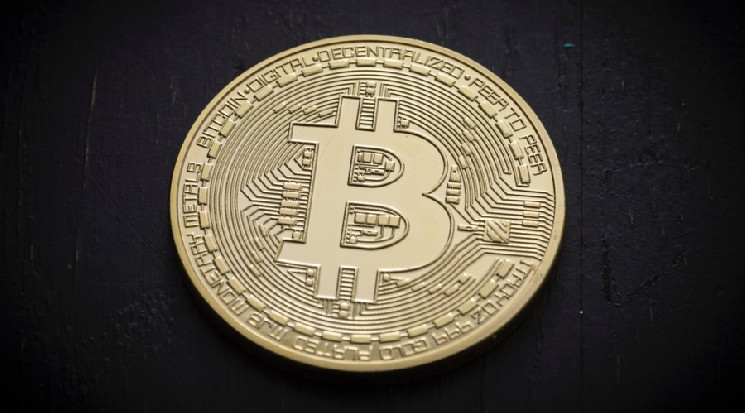
Bitcoin is the pioneer and poster child in the fascinating world of cryptocurrencies. Bitcoin, in addition to being a digital money, runs on a revolutionary premise known as blockchain technology—a decentralized, transparent record system. This system is built around a process known as “mining.”
Mining is more than simply extracting physical resources from the earth; it is also the method by which new Bitcoins are created and transactions are authenticated and added to the blockchain in the context of Bitcoin. This comprehensive guide goes deep into the world of Bitcoin mining, investigating its complexities, relevance, hazards, and broader ramifications for investors and the cryptocurrency ecosystem.
At its core, Bitcoin mining is the process of confirming Bitcoin network transactions and adding them to the blockchain—a distributed and immutable ledger that records all Bitcoin transactions. Mining entails solving complicated mathematical riddles that authenticate transaction legitimacy and generate new Bitcoins as a reward for miners’ efforts.
How Does Bitcoin Mining Work?
The Proof of Work (PoW) consensus mechanism governs the Bitcoin network. Miners compete by employing processing power to solve complicated mathematical riddles. With Proof-of-Work, the miner who solves the riddle first gets to add the next block of transactions to the blockchain. This procedure is time-consuming and requires the use of sophisticated gear.
Why Mine Bitcoin?
Mining performs two functions in the Bitcoin ecosystem. First, it ensures the network’s security and integrity by validating and confirming transactions. Second, it creates new Bitcoins and puts them into circulation, so managing the rate at which new currencies are created. This procedure is critical to preserving Bitcoin’s predictable supply schedule.
How Does Bitcoin Mining Affect Investors?
The impact of Bitcoin mining on investors is diverse. Because the network’s security is dependent on miner participation, a strong mining environment is critical for sustaining investor trust. Furthermore, the controlled issue of new Bitcoins via mining aids in the management of inflation and scarcity, both of which can influence Bitcoin’s price dynamics.
How Bitcoin Miners Get Paid
Bitcoin mining hardware may be expensive, miners are nicely compensated in two ways: transaction fees and the creation of new Bitcoins. To incentivize miners to prioritize their transactions, each confirmed transaction on the Bitcoin network contains a fee paid by the sender. Furthermore, a certain number of newly created Bitcoins are awarded to the miner who successfully adds a new block to the network.
How To Mine Bitcoin
ASICs (Application-Specific Integrated Circuits) are specialized pieces of hardware that are optimized for the difficult mathematical calculations required by the PoW algorithm. Miners must also join mining pools, which are collaborative efforts in which miners pool their processing resources to maximize the likelihood of successfully mining a block and sharing the profits.
Is Bitcoin Mining Legal?
Bitcoin mining is legal in different countries. While some governments consider it a legitimate economic activity, others have placed limitations or outright bans on it. Before beginning mining activities, miners must conduct study and grasp the legal situation in their area to see if they can legally earn Bitcoin.
The Economics of Bitcoin Mining
Bitcoin mining is an energy-intensive process that necessitates large capital and operational expenditures. For mining to be successful, the potential rewards, which include newly created Bitcoins and transaction fees, must surpass the costs.
Is Bitcoin Mining Profitable?
Bitcoin mining profitability is determined by a number of factors, including the current Bitcoin price, mining difficulty, electricity costs, and hardware efficiency. Mining can become more profitable as the price of Bitcoin rises, but more competition can also lead to increased mining difficulty.
The profitability of mining hardware is governed by its hash rate (computational power), energy efficiency, and operational costs. As technology advances, more efficient and powerful hardware options become available, influencing miners’ equipment upgrade selections.
How to Choose the Right Mining Hardware for Bitcoin
Choosing the best mining hardware necessitates careful evaluation of elements like as initial prices, energy usage, hash rate, and prospective profitability. Because the Bitcoin mining rig scene is competitive and continually changing, conducting research is critical for making educated judgments (ie. the costs of Bitcoin mining).
Risks of Mining Crypto
Mining cryptocurrency is not without risk. The volatility of cryptocurrency prices might have an impact on mining profitability. Furthermore, due to technological improvements, hardware investments may quickly become obsolete. Regulatory uncertainty and potential legal complications can also present difficulties.
Conclusion
To summarize, Bitcoin mining is the backbone of the cryptocurrency’s decentralized network, and it is critical for transaction validation, security, and fresh coin issuance. While it has potential benefits, it is a complicated process that includes everything from technological complications to economic considerations and legal ramifications. As the cryptocurrency ecosystem evolves, mining’s role remains critical, pushing innovations, impacting market dynamics, and contributing to the ongoing story of the financial revolution.
FAQs
How long it takes to mine one Bitcoin?
The amount of time required to mine one Bitcoin varies depending on factors such as hash rate, mining difficulty, and hardware efficiency. It now takes about 10 minutes on average to mine a block and collect the block reward, which is currently 6.25 Bitcoins.
Will Bitcoin mining ever end?
Yes, Bitcoin mining will eventually come to an end. Bitcoin’s total quantity is limited to 21 million coins. The last Bitcoin is expected to be mined around the year 2140, since mining incentives fall over time due to halving events.
Can you mine Bitcoin at home?
While it is technically possible to mine Bitcoin at home, the increasing complexity of mining and the requirement for specialized technology make it unprofitable for most people. Mining pools and large-scale mining operations are becoming more common.
Can I mine Bitcoin on my laptop?
It is not recommended to mine Bitcoin on a laptop. Laptop computers lack the computational power and cooling capacity essential for efficient mining. Furthermore, mining might put a burden on a laptop’s components and shorten its lifespan.
How Does Mining Confirm Transactions?
Mining validates transactions by solving difficult mathematical challenges. When a miner solves the problem and adds a new block to the blockchain, the transactions included within that block are considered confirmed and immutable.
ASIC Mining vs. GPU Mining
In what concerns Bitcoin mining, ASIC (Application-Specific Integrated Circuit) and GPU (Graphics Processing Unit) methods stand as two formidable contenders. ASIC miners, meticulously engineered for SHA-256 calculations, deliver impressive efficiency and hash rates, albeit at the cost of specialization. This has sparked debates about centralization due to dominant ASIC-driven operations. On the other side, GPU mining capitalizes on versatile graphics cards, offering adaptability beyond mining but with higher energy consumption and relatively lower hash rates. The choice between the two hinges on considerations like cost, energy efficiency, and individual miners’ aspirations.
Does Crypto Mining Damage Your GPU/Computer?
Many may wonder about the risks of Bitcoin mining. In fact, mining coin may be quite taxing on hardware components, particularly GPUs. Extended periods of heavy use might cause greater wear and tear on Bitcoin mining machines, lowering the component’s lifespan. To avoid any damage, well-designed mining machines and proper cooling and maintenance are essential.
What is Bitcoin’s hashing algorithm?
Bitcoin’s hashing algorithm, known as SHA-256 (Secure Hash Algorithm 256-bit), underpins the security and integrity of the cryptocurrency network. This cryptographic process transforms transaction data into a fixed-length hash, characterized by its one-way nature and unpredictability. Miners compete to solve complex mathematical puzzles using SHA-256, validating transactions and adding new blocks to the blockchain. The algorithm’s computational intensity and decentralized design ensure the network’s resilience against tampering and fraud. Its strength lies in its collision resistance, making it extremely improbable for two different inputs to produce the same target hash output, forming the cornerstone of Bitcoin’s trustless environment.
Why Does Mining Use So Much Electricity?
To solve complicated riddles and validate transactions, mining necessitates huge processing power. As miners strive to answer these challenges, significant energy consumption is required. One of the accusations leveled towards cryptocurrency mining’s environmental impact is its excessive energy use.