Bitcoin miners have evolved from the beginning when anyone could mine with their CPU at home to a model mostly dominated by sophisticated conglomerates, many of whom employ media relations personnel and use lawsuits, lobbyists, and other corporate tactics to increase their profits.
NASDAQ-listed miner Riot Blockchain recently joined a case against the US Department of Energy, in an attempt to prevent the release of survey data about Bitcoin miners’ energy usage. That data would have helped the Department of Energy to recommend better electricity usage policies, however, miners wanted to hide their energy usage from public view, so they filed a legal complaint in a Waco, Texas courthouse.
Keeping Bitcoin electricity usage private
The lawsuit filed by the Texas Blockchain Council (which has Bitcoin miners as members), claimed that the survey would cause irreparable harm to their business. Furthermore, Council members alleged the Department of Energy violated the Paperwork Reduction Act by failing to provide 60 days’ notice and by threatening “criminal fines and civil penalties” against Texas Blockchain Council members.
Texas Blockchain Council President Lee Bratcher said in a press release announcing the lawsuit, “The EIA’s actions represent an alarming precedent of government intrusion into private industry operations without just cause or proper process.”
In addition to these legal arguments, it is not difficult to see an agenda for these miners’ political actions. Not only would the survey have given offshore competitors visibility into mining operations, but the disclosure could have had negative media consequences, with the potential to affect their access to grants and subsidies.
Their lawsuit worked. Government officials have promised to destroy all data that the Department of Energy collected in an apparent settlement with the Texas Blockchain Council. A court order also blocked any attempts to continue the survey until the matter could be litigated or settled.
Read more: Illegal crypto mining rigs found in Poland’s Supreme Administrative Court
Bitcoin miners become lobbyists
Many Bitcoin miners rely on favors from state and municipal governments. Lobbying for governmental handouts like zoning rights, noise variances, and subsidies has become a major business priority.
Bitcoin mining in the United States uses as much electricity as the state of Utah. Wherever they set up shop, miners add a heavy load on power grids. A power grid in Texas, for example, failed during unusually frigid weather in February 2021. State governor Greg Abbot asked Bitcoin miners for help at that time, and soon instituted policies to pay them to stop mining during future emergencies, on demand.
Since then, politicians have criticized bitcoin mining companies with facilities in Texas for gobbling up energy, contributing to higher electricity bills for local residents, and emitting greenhouse gases. Eight Democratic members of Congress co-signed a letter to major Bitcoin mining companies expressing concerns about their energy usage.
Texas residents have also complained about the noise coming from bitcoin mining facilities. When miners operate their rigs, they have to also run huge fans to keep their facilities cool. One resident in Fort Hood near a Marathon Digital facility compared it to living near an airport with jets constantly taking off. Other protestors cited a drain of local funding and the likelihood of higher electric rates for existing residents.
Profitable because of the subsidies
Many miners obscure their otherwise loss-generating mining business through cleverly crafted earnings announcements, and reporting blended revenue that includes subsidies.
To put it bluntly, many Bitcoin miners are profitable because the government pays them not to mine Bitcoin. These so-called “load balancing” or “grid stabilization” payments incentivize miners to turn off their machines during heavy electrical usage elsewhere in nearby cities.
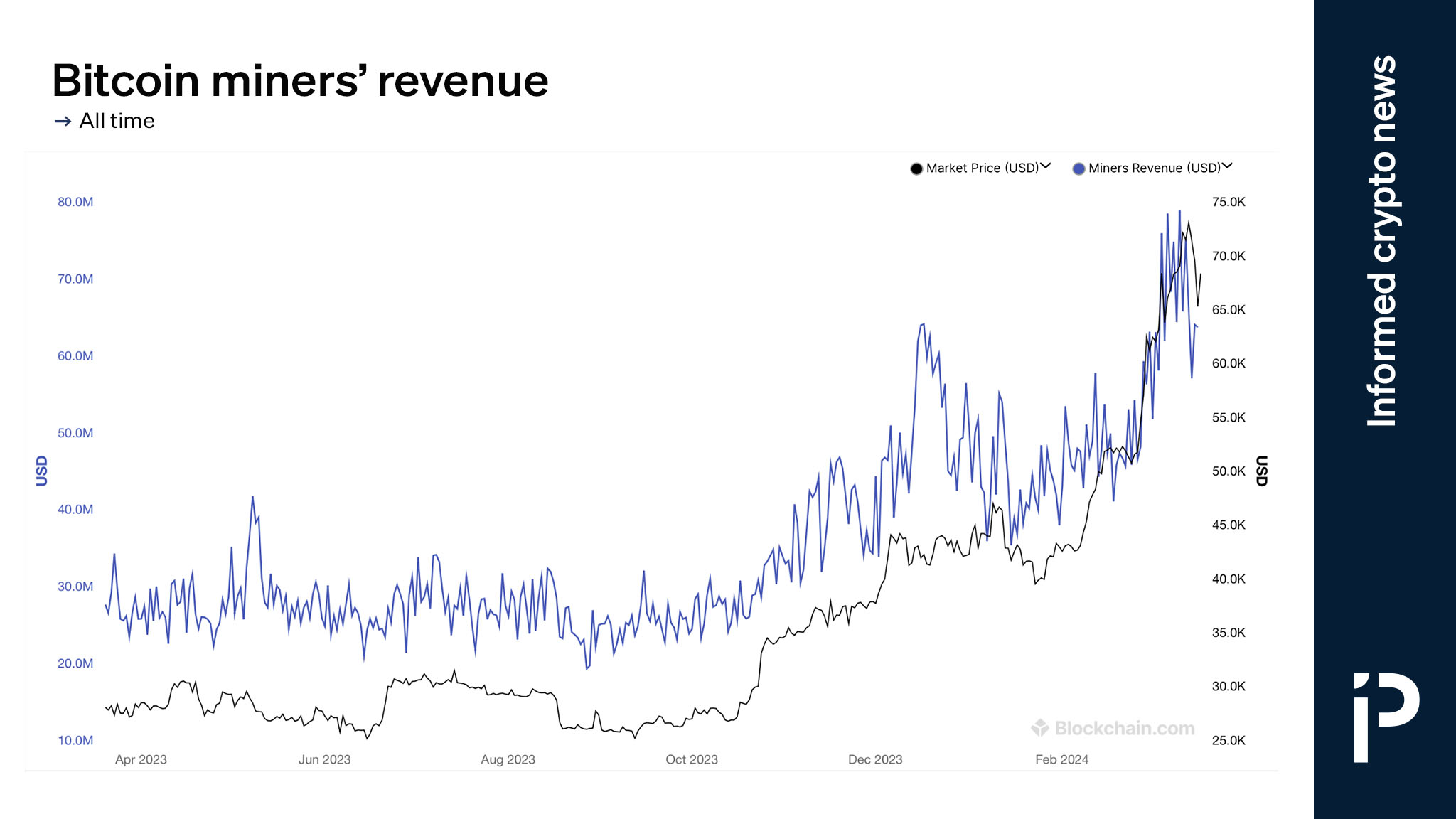
Again, take Riot Blockchain as an example. The company collected $31.7 million from selling already purchased energy and turning off mining rigs in response to rising demand during the summer of 2023. During that same period, it earned just $10 million through bitcoin mining.
The difference between $10 million in revenue and $31.7 in subsidies illustrates the little-known economic reality of Bitcoin miners. Domestic miners struggle due to ultra-competitive miners scouring the globe for cheap energy. Competing against state-backed miners in resource-rich countries like Russia, Venezuela, or Kazakhstan, US miners struggle to earn razor-thin profit margins. As a result, state and municipal government subsidies are important for the continued existence of Bitcoin miners in other jurisdictions, like Texas.
Read more: Bitcoin mining in Niagara Falls goes ‘brrr’ in all the wrong ways
Defending Bitcoin miners’ right to use electricity
To the credit of miners, Bitcoin Mining Council surveys reveal that a significant portion of members’ electricity derives from renewable sources. Additionally, studies indicate that bitcoin mining accounts for a tiny fraction of global electricity production.
Their electricity use is also immensely valuable. The consumption of electricity secures the $1.3 trillion Bitcoin network against various attacks like double-spending or block stuffing. Rather than a waste or an annoyance, Bitcoiners view electricity consumption as an indispensable safeguard for their financial system.
According to Satoshi Nakamoto in an email to Martti Malmi, “Proof of work is the only solution I’ve found to make peer-to-peer electronic cash work without a trusted third party.” If true, electricity usage by Bitcoin is the only way to secure an electronic cash that does not rely on trusted third parties.