Congress is expanding its probe into insider trading across prediction markets to include Hyperliquid, Crypto.com, and Aristotle Exchange, the operator of PredictIt.
On the 29th of September, House Committee on Oversight and Government Reform Chairman James Comer (R-Ky) wrote to the CEOs of the three platforms. He sought more information on how the platforms identify customers, their geolocations, and report suspicious activity.
Chair Comer supported his continued investigation into the platforms, noting that,
As online prediction platforms grow and become more mainstream, some bad actors have exploited the platforms to make thousands of dollars by placing bets based on nonpublic information.
This is the second wave of congressional investigation into the booming prediction markets for insider trading.
Congress intensifies scrutiny of prediction markets
The first phase began in May and initially targeted the two top prediction markets, Kalshi and Polymarket, covering similar areas: customer identification and measures used to stop insider trading.
In a separate statement, the Oversight and Government Reform Committee said,
We’ve received nearly 1,000 docs and 5 briefings from Polymarket and Kalshi. We’re demanding answers from Hyperliquid Labs, Crypto․com & Aristotle Exchange.
The insider trading activity has been rampant. Earlier this year, a US special forces soldier allegedly made $400K betting on the removal of Venezuelan President Nicolás Maduro. He denied the charges.
In August, Kalshi banned former Representative George Santos for allegedly making a +$17K profit. Santos bet against his own attendance at President Donald Trump’s State of the Union address in February.
In Q1, Kalshi reported that it has opened 150 internal investigations and made over 20 referrals to law enforcement for possible insider activity. In fact, it now requires some traders to declare their employers to help with screening.
However, Hyperliquid is the only fully decentralized platform in the probe with no KYC (know your customer) model. The committee claimed that a massive $1.1B short position was opened before a major tariff policy announcement last October, but there was no “identity verification.”
This transaction, precisely timed to a nonpublic government decision, executed on a platform with apparently no identity verification or mechanism to refer the responsible party to U.S. law enforcement, mirrors a pattern of insider trading.
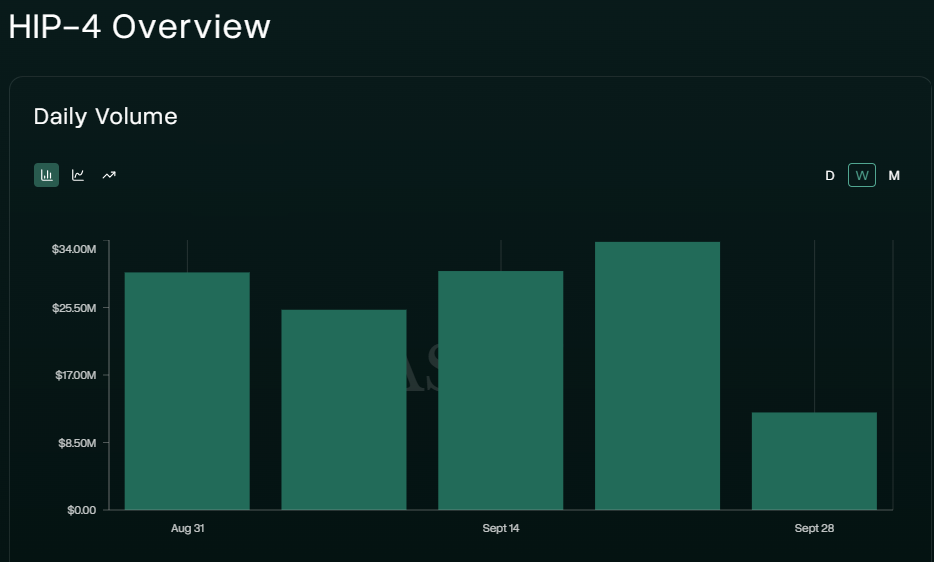
Hyperliquid expanded into prediction markets in May but is currently doing only about $30M in weekly volume. It will be interesting to read Hyperliquid’s response to the investigation.
Separately, the Senate Democrats want bipartisan legislation for the segment, with SEC oversight in event contracts deemed securities. It remains to be seen how these issues will be considered in the upcoming framework for prediction markets.
Final Summary
- House Oversight and Government Reform Committee expanded the insider trading probe to three platforms, including Hyperliquid.
- Prediction markets are increasingly under Congress’ scrutiny, and flagged issues may inform legislative response.