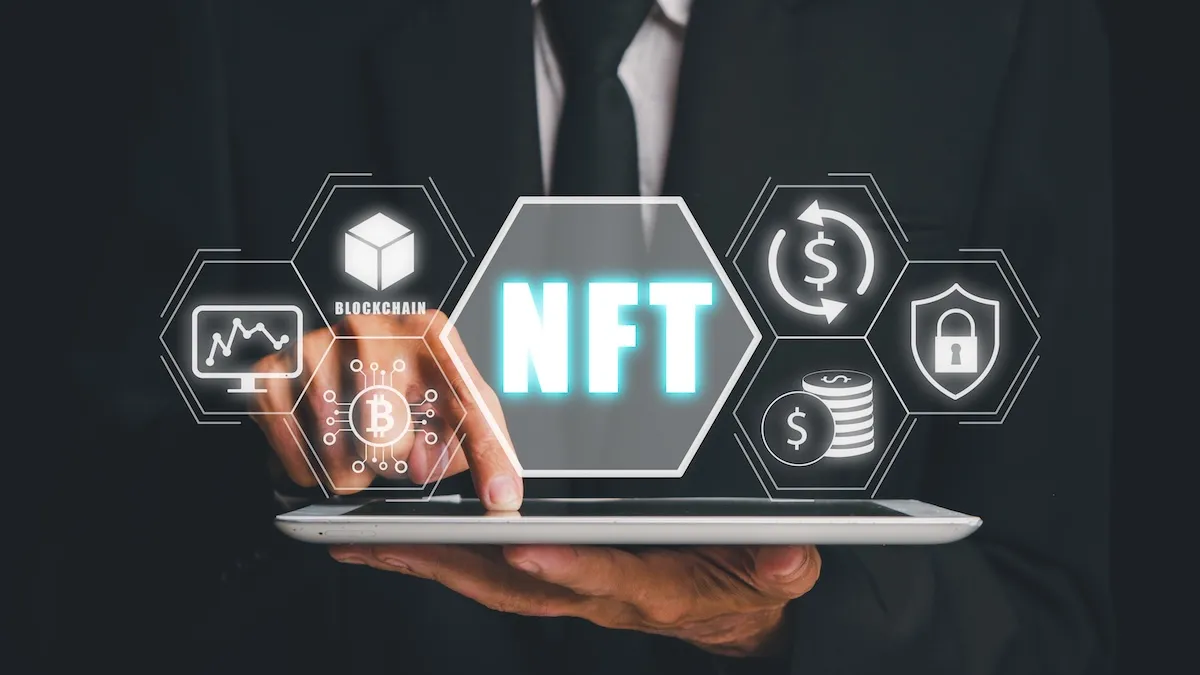
Non-fungible tokens (NFTs) first became popular for collectibles and digital art. Since 2022, new technology has turned NFTs into programmable ownership layers. These blockchain-based assets now include property rights that are enforceable, transferable, and customizable, all written directly into smart contract code.
With this new approach, ownership is not just a record but something that can be executed as code. As a result, developers, researchers, and legal experts now see programmable NFTs as a key part of the infrastructure needed to address the limits of older Web2 digital property systems.
From Custodial Access to Executable Ownership
Before blockchain systems such as Ethereum gained adoption, digital assets existed within centralized databases. Users depended on platforms for:
-
Asset custody
-
Transfer approval
-
Monetization permissions
-
Data persistence
In these systems, users had access only under certain conditions and did not have full control over their assets.
NFTs introduced three architectural shifts:
-
Immutable Ledger-Based Ownership
Each transfer is recorded on a decentralized ledger. After confirmation, the transaction history cannot be changed unless the whole network agrees. This creates a permanent record of ownership. -
Smart Contract–Defined Rights
The rules for ownership are built right into the contract. Things like transfer limits, royalty payments, and permissions are handled automatically. -
Permissionless Verification
Anyone can check who owns an asset without needing to use platform APIs or private databases.
Together, these features make digital property programmable and manageable like infrastructure.
Technical Architecture
Token Standards and Interoperability
Standardization ensures NFTs interact consistently across wallets, marketplaces, and decentralized applications.
On Ethereum:
-
ERC-721
Defines unique token identifiers. Each token ID maps to a single owner. Widely adopted for art, collectibles, and identity tokens. -
ERC-1155
Supports batch transfers and hybrid token models. Frequently used in gaming environments where fungible and non-fungible assets coexist. -
ERC-998
Introduces composability. NFTs can own other NFTs or fungible tokens, enabling hierarchical asset structures.
On Solana:
-
NFTs are built using SPL token infrastructure combined with metadata programs.
-
Programmable NFTs (pNFTs) rely on Metaplex, which enforces rule-based authorization layers for every token action.
Standards provide the base, with programmability built on top.
Mechanisms of Programmability (Expanded)
1. Automated Royalties and Revenue Routing
The introduction of EIP-2981 allowed NFT contracts to publish royalty parameters directly within metadata.
Technical implications include:
-
Secondary sale detection at the contract level
-
Automatic percentage calculations
-
On-chain revenue routing to multiple addresses
-
Support for split royalty structures (e.g., artist + collaborator)
Some advanced systems use escrow contracts or special transfer rules to prevent unauthorized sales on marketplaces that do not follow the standards.
There are still some limits. Enforcing royalties only works if everyone in the ecosystem follows the rules, and some marketplaces let users choose whether to pay royalties. Even so, the technology for ongoing creator payments is now available.
2. Dynamic NFTs (dNFTs): Stateful Assets
Dynamic NFTs rely on metadata mutability controlled by smart contracts.
State changes occur via:
-
On-chain triggers:
Contract events such as staking duration, governance votes, or gameplay milestones. -
Oracle-fed data:
External inputs (weather data, sports scores, asset prices) transmitted through decentralized oracle networks. -
Time-based logic:
Epoch-based transitions or vesting milestones.
Technically, metadata may be stored:
-
Fully on-chain (expensive but immutable)
-
Off-chain via IPFS/Arweave with hash verification
-
Hybrid structures combining static and dynamic fields
Security considerations include oracle integrity, update permissions, and replay protection.
With dynamic NFTs, ownership is not just about holding an asset. The asset can change and evolve based on actions or events.
3. Granular Delegation and Authorization Layers
Programmable NFTs implemented through Metaplex introduce rule sets that mediate every token instruction.
Advanced rule configurations can:
-
Require proof-of-payment before transfer finalization
-
Restrict transfers to whitelisted addresses
-
Allow temporary staking without permanent custody change
-
Assign limited-use delegates (e.g., sale-only authority)
-
Enable revocable usage rights
This architecture separates:
-
Title ownership
-
Operational permissions
-
Monetization rights
This kind of separation is similar to ideas in traditional property law, such as usufruct, leasing, and sub-licensing.
4. Composability and Nested Asset Structures
With ERC-998, NFTs may contain subordinate assets.
Applications include:
-
Game avatars holding equipment NFTs
-
Digital real estate parcels containing subdivided lots
-
Intellectual property bundles with licensing tokens
This setup lets people manage rights in layers and transfer groups of assets in one step.
In DeFi contexts, composable NFTs can serve as collateral containers holding multiple tokens under unified ownership.
5. Interoperability Across Protocols
Programmable NFTs interact with:
Because NFTs follow open standards, they can be referenced by other smart contracts without centralized integration agreements.
For example:
-
A lending protocol may accept an NFT as collateral.
-
A DAO may grant voting weight based on NFT ownership.
-
A gated platform may verify wallet ownership before granting access.
Because features can be combined, it is easier to move assets between applications.
Expanded Use Cases
Gaming Economies
In blockchain-native games:
-
Asset ownership persists independently of centralized servers.
-
Characters and items may accumulate permanent on-chain attributes.
-
Interoperability enables asset migration across compatible titles.
Game studios are now testing hybrid systems. These use centralized servers for gameplay but rely on decentralized layers for asset ownership.
Real-World Asset (RWA) Tokenization
NFTs serve as digital representations of physical or financial assets, including:
Smart contracts can automate:
Institutional pilots have demonstrated tokenized bond issuance and property fractionalization using NFT frameworks.
Regulations vary by country, and legal enforcement depends on off-chain agreements that recognize these tokenized assets.
Digital Identity and Reputation Systems
NFT-based identity systems encode:
With dynamic updates, a person’s reputation can change over time depending on their actions.
Unlike fixed credentials, on-chain identity NFTs allow people to prove who they are across different decentralized platforms.
AI Agents and Machine Economies
In emerging architectures, AI agents operate blockchain wallets linked to NFT-based identity containers.
An NFT may:
-
Define operational boundaries
-
Hold delegated permissions
-
Store governance roles
-
Anchor economic activity logs
For machine-to-machine interactions like automated trading, DAO participation, and service exchange, it is important to have ownership structures that can be verified. NFTs provide this kind of programmable container.
Security and Governance Considerations
Programmable ownership makes systems more flexible, but it also introduces new risks to how they are designed.
Key considerations include:
-
Oracle reliability: Compromised data feeds can corrupt dynamic states.
-
Upgradeability controls: Proxy contracts require governance safeguards to prevent malicious updates.
-
Delegation revocation logic: Improperly structured permissions may create exploit vectors.
-
Marketplace standard divergence: Inconsistent royalty enforcement impacts economic predictability.
Large projects now regularly use security audits and formal checks.
Current Trajectory (2025–2026)
The speculative surge of 2021 gave way to infrastructure-focused development.
Current NFT deployments emphasize:
-
Utility and access control
-
Compliance-aware tokenization
-
Programmable financial instruments
-
Identity-layer integration
-
AI-compatible ownership containers
More investment is now going to infrastructure providers instead of companies issuing collectibles.
Structural Significance
Programmable NFTs mark a change in how digital property works.
Ownership now includes:
People often compare NFTs to the basic protocols of the internet. Just as TCP/IP made data transfer standard, programmable NFTs aim to make digital property rights standard and easy to verify. The era of collectibles made NFTs popular. Now, the focus is on building strong, lasting systems.
As decentralized finance expands, more real-world assets are being tokenized, and autonomous agents are starting to operate independently. Programmable NFTs are likely to become the main way to manage ownership in these systems.