Proposal calls age estimation facial recognition
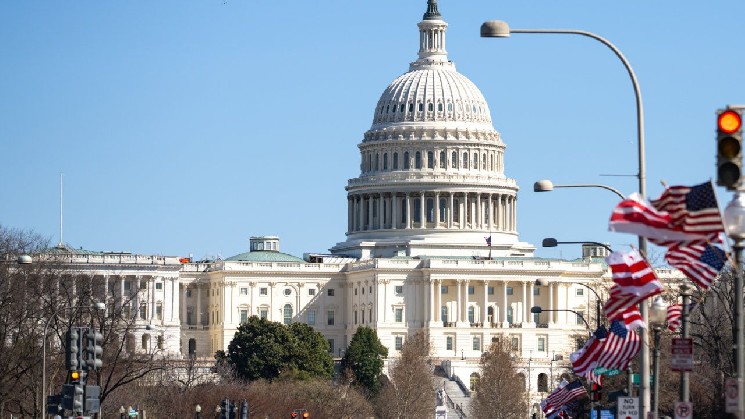
Rep. Josh Gottheimer (NJ-5) introduced the bipartisan proposal on Wednesday with eight original cosponsors, seeking federal facial age checks across online sportsbooks and prediction markets. The Facial Recognition to Protect Children Act would require platforms to verify a user’s age either when the person logs in or before a wager or trade is placed.
The bill’s original co-sponsors are Reps. Jeff Van Drew, Nick LaLota, Kristen McDonald Rivet, Jimmy Panetta, Darren Soto, Tom Suozzi, Ritchie Torres and Bruce Westerman. Gottheimer’s office said the technology would read facial structure and patterns to estimate a user’s age without storing the person’s identity or personal biometric information.
Gottheimer framed the measure as a response to minors using accounts belonging to parents, siblings or friends. “We wouldn’t accept that at a casino in Las Vegas,” the New Jersey Democrat said, arguing that online access should not operate through an honor system. The proposal is backed by child-safety group ParentsRISE and has received support from within the prediction-market industry.
Despite the bill’s name, the process described is more accurately facial age estimation than conventional facial recognition. Recognition technology attempts to establish who a person is by comparing a face with known identities, while age-estimation software analyzes a face to predict how old the person appears. The National Institute of Standards and Technology categorizes age estimation as face analysis rather than identity recognition.
NIST evaluated six age-estimation algorithms and found no single system clearly outperformed the others. Their average error on a shared database of visa photographs was 3.1 years, while performance varied according to image quality, age, gender, region of birth and interactions among those factors. Error rates were almost always higher for female faces than male faces.
Most users are close to a platform’s legal age threshold. The bill summary does not explain what happens when software gives an uncertain result, whether a user may provide identification instead, how an incorrect decision may be challenged or which technical accuracy standard operators must meet.
The complete legislative text and an assigned bill number were not publicly indexed with the announcement. Gottheimer’s summary therefore, does not yet establish which federal agency would enforce the measure, what penalties would apply, when the mandate would take effect or how its proposed biometric safeguards would interact with state privacy laws. At the time of writing, these elements remain up in the air.
The lawmakers cited a January study by Common Sense Media, which surveyed 1,017 U.S. boys ages 11 through 17. It found that 36% had participated in at least one gambling or gambling-like activity during the previous year, rising to 41% among those ages 14 through 17. However, the study used a broad definition that included loot boxes, skin cases, fantasy contests, informal wagers and other gaming-related activities; 12% of all respondents reported sports-related gambling.
Among the 353 boys who reported gambling, 27% said they had experienced negative effects such as stress or conflict, while 40% expressed some regret. The study did not establish that 36% of boys had accessed licensed sportsbooks or prediction platforms, making the narrower sports-gambling findings more relevant to the legislation than its headline statistic.
Regulators increasingly treat age and identity controls as a central issue for both bookmakers and prediction markets. Nine European gambling authorities recently cited weak age checks among their concerns about prediction platforms. The bill would carry that debate into Congress by placing both types of online betting business under the same proposed child-protection rule.