
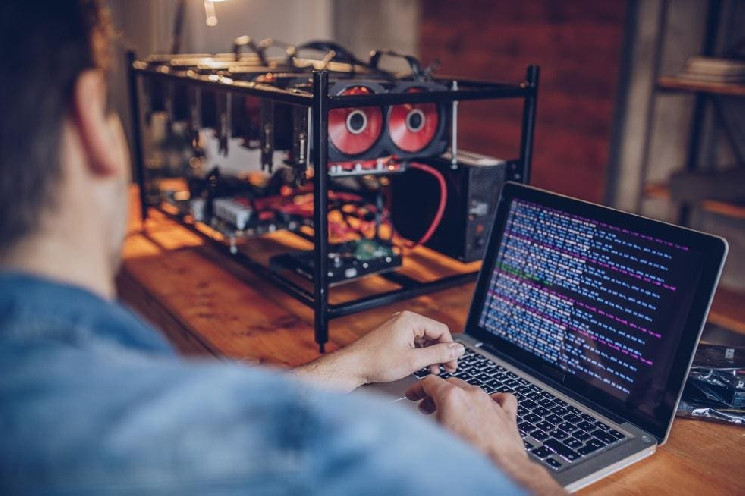
Bitcoin miners don’t solve complex math problems – they guess numbers. While “solving mathematical puzzles” has become a common description of bitcoin mining, the process more closely resembles a massive digital lottery where miners race to generate random numbers until they find one that fits specific criteria. Importantly, there’s no way to calculate the correct number directly – miners can only try different numbers until they find one that works, as reverse calculation is impossible by design.
The key difference lies in computation versus calculation. A math problem like calculus requires step-by-step problem solving. Mining is like trying to flip a coin and get heads 10,000 times in a row – while it sounds impossible for a human, modern mining machines make trillions attempts per second to find the right combination. One computer can’t solve the puzzle better than another – it can only make more guesses faster.
You can even mine bitcoin with pencil and paper by manually calculating SHA-256 hashes. A single computation would take many hours, making it impractical but proving that mining requires no advanced math – just persistence in trying different numbers until finding one that works. The process remains identical whether you use paper or a warehouse of machines – only the speed differs.
Since mining success depends on the number of attempts, regular computers quickly became inefficient. Like any production business, mining now requires capital investment in specialized equipment – miners typically purchase ASIC machines costing from $500 to $20,000 per unit. This drives most mining to industrial facilities, but individual miners continue to operate with proper equipment investment.
Mining converts electrical energy into heat through the physical process of electrons moving through semiconductor circuits during computations. As computers process these calculations, about 95% of the consumed electricity transforms into thermal energy. This property led manufacturers and enthusiasts to develop dual-purpose devices – specialized heaters and boilers that mine bitcoin while warming living spaces, reducing heating costs and in some cases generating modest profits.
While some small-scale miners focus on heat recycling, large-scale operations seek areas with cheap power. Countries with abundant renewable energy, like Bhutan which mined $750 million worth of bitcoin using hydroelectric power from its Himalayan rivers, show how nations can convert unused renewable energy capacity into significant financial returns.
How Bitcoin Hash Calculation Works
When users make bitcoin transactions, they enter a pool of pending operations waiting for verification. Miners combine pending bitcoin transactions into a block and add a random number to it. Each miner competes to be first in validating a block.These blocks are then verified by thousands of Bitcoin nodes across the network. They process this data through the SHA-256 formula, producing a 64-character code called a hash. A hash qualifies only if it falls below the network’s target value, which Bitcoin sets and maintains. This target represents the required difficulty level – every new hash must start with a specific number of zeros defined by this value. Miners keep trying different random numbers until they find a qualifying hash.
The Bitcoin network monitors how quickly miners find valid hashes. Every 2,016 blocks, the network adjusts its target value. When miners find blocks too quickly, the network lowers the target, requiring smaller hash numbers. When block discovery slows down, the target rises. This adjustment system maintains a steady rate of one new block every 10 minutes, regardless of total mining power.





1 Comment
gluco6 reviews : https://gluco6reviews.usaloves.com/